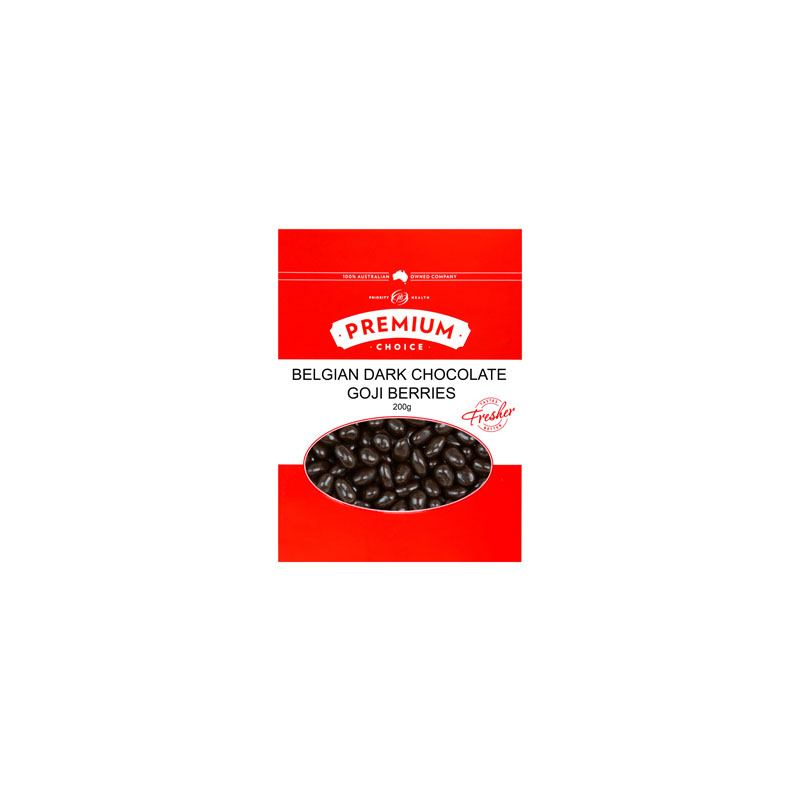
Goji berries coated in dark chocolate. Made with 75% cocoa.
The fat in dark chocolate consists of oleic acid and stearic acid. Oleic acid can actually help reduce the amount of “bad” LDL cholesterol in your blood, while stearic acid won’t raise or lower your cholesterol. Dark Chocolate also contains flavonoids called procyanidins & epicatechins; flavonoids are part of a group of antioxidants known as polyphenols and are found in a variety of foods including dark chocolate, tea, red wine, and various fruits and vegetables. Dark chocolate also contains a number of minerals, including calcium, magnesium, and potassium. Obviously, dark chocolate should be eaten in moderation.
Premium Choice Goji Berries contain many nutrients and phytochemicals including
• 11 essential and 22 trace dietary minerals
• 18 amino acids
• 6 essential vitamins
• 8 polysaccharides and 6 monosaccharides
• 5 unsaturated fatty acids, including the essential fatty acids, linoleic acid and alpha-linolenic acid
• beta-sitosterol and other phytosterols
• 5 carotenoids, including beta-carotene and zeaxanthin (below), lutein, lycopene and cryptoxanthin, a xanthophyll
• numerous phenolic pigments (phenols) associated with antioxidant properties
Select examples given below are for 100 grams of dried berries.
• Calcium. Goji Berries contain 112 mg per 100 gram serving, providing about 8–10% of the Dietary Reference Intake (DRI).
• Potassium. Goji Berries contain 1,132 mg per 100 grams dried fruit, giving about 24% of the DRI.
• Iron. Goji Berries have 9 mg iron per 100 grams (100% DRI).
• Zinc. 2 mg per 100 grams dried fruit (18% DRI).
• Selenium. 100 grams of dried Goji Berries contain 50 micrograms (91% DRI)
• Riboflavin (vitamin B2). At 1.3 mg, 100 grams of dried Goji Berries provide 100% of DRI.
• Vitamin C. Vitamin C content in dried Goji Berries has a wide range from 29 mg per 100 grams to as high as 148 mg per 100 grams (respectively, 32% and 163% DRI).